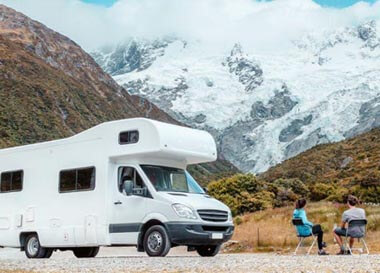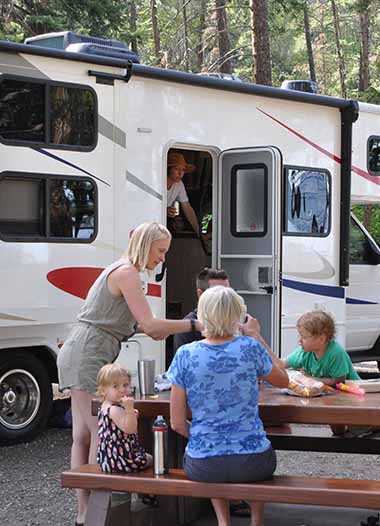
Comparing CanaDream RV rental costs between families and couples reveals significant differences beyond base rental rates. Families face additional expenses that couples typically avoid, including higher fuel costs, higher campground fees, and unexpected cleaning charges.
May 2026
Camper Van Rental vs Car and Hotel Costs for Road Trips
May 17th 2026
Understanding Base Rental Rate Differences
The most visible cost difference appears in the base rental rate. A Deluxe Van Camper (DVC) suitable for two adults starts at a lower daily rate than a Maxi Motorhome (MHA) that sleeps six.
However, the rental rate represents only one component of total costs. Families must consider vehicle size, fuel efficiency, campground pricing, and consumption patterns that change with children aboard.
Base rates increase with vehicle size due to higher replacement costs, increased insurance premiums, reduced fleet flexibility, and seasonal demand concentrated around school holidays. Couples benefit from year-round availability and competitive shoulder season pricing.
Fuel Costs: The Hidden Budget Multiplier
Fuel consumption differences between compact and large motorhomes create substantial cost variations over multi-week trips. A Super Van Camper (SVC) averages 11-13 L/100 km, while a Maxi Plus Motorhome (MHX) consumes 18-22 L/100 km under typical driving conditions.
On a 3,000-kilometre journey at current fuel prices averaging $1.60 per litre:
Vehicle Type | Fuel Economy | Total Litres | Fuel Cost |
Super Van Camper (SVC) | 12 L/100 km | 360 L | $576 |
Midi Motorhome (MHB) | 16 L/100 km | 480 L | $768 |
Maxi Plus Motorhome (MHX) | 20 L/100 km | 600 L | $960 |
The $384 difference between the smallest and largest options represents nearly 20% of a typical week-long rental for a compact unit. Families covering greater distances or travelling during peak fuel price periods face even larger disparities.
Fuel costs compound with trip length. A two-week journey doubles the difference to $768, while month-long adventures create fuel cost gaps exceeding $1,500 between vehicle categories.
Campground Fees: Per-Person vs Per-Site Pricing
Campground pricing structures significantly affect family versus couple budgets. Most Canadian campgrounds charge per site rather than per person, offering families substantial savings. A family of four pays the same $35-65 nightly rate as a couple, while two hotel rooms would cost $300-400.
However, certain fees scale with occupancy, including extra-vehicle charges, visitor passes, activity fees, and electrical service upgrades for air conditioning. Provincial and national parks charge per-site pricing regardless of the number of occupants. Private campgrounds occasionally charge $5-10 per additional adult.
Couples benefit from the flexibility to choose smaller campgrounds with tighter spacing that larger motorhomes cannot access.
Do Families Actually Save Money with an RV?
Families achieve meaningful savings with RV travel on trips extending beyond five days. A family of four booking mid-range hotels at $180 per night spends $1,260 weekly on accommodation. The same family in a CanaDream motorhome, paying $65 per night in campground fees, spends $455, saving $805 weekly.
Families must account for increased RV costs, including higher base rental rates, higher fuel consumption, higher food costs, additional travel extras, and potential cleaning fees.
Cost savings include eliminating restaurant meals, single-occupancy bookings, free parking at attractions, reduced entertainment costs with onboard amenities, and the flexibility to shop at budget-friendly locations.
The savings equation shifts in favour of families on trips of 10-14 days or longer. Shorter weekend getaways often favour couples in compact vans.
Food and Supply Costs: Feeding a Family vs a Couple
Food expenses are one of the largest daily cost categories families face. A couple spending $75 daily on groceries can expect that to double or triple for a family of four to six. Children’s snack consumption, beverage preferences, and meal waste increase budgets beyond simple per-capita multiplication.
Families benefit from bulk purchasing at warehouse stores, meal-preparation flexibility for picky eaters, snack availability, avoiding expensive stops, and reduced pressure to dine out.
Smart strategies include planning meals before departure, purchasing shelf-stable items at home, identifying grocery stores along your route rather than tourist-area markets, preparing double batches for future meals, and allocating specific snack containers per child.
Couples often view dining out as a vacation highlight, while families face logistical challenges such as high chairs, children’s menus, and patience.
Do Kids Increase Cleaning and Damage Risks?
Children substantially increase the risk of incurring cleaning fees upon RV return. CanaDream expects vehicles returned in the same condition as provided, with excessive mess triggering charges of $150-350.
Common family-related issues include food spills embedded in upholstery, sticky juice-box residue, tracked-in sand and dirt, bathroom accidents, and excessive pet hair.
Families minimize risks by establishing firm eating rules, conducting daily cleaning, using washable seat covers, performing thorough cleaning before return, and documenting vehicle condition with photos.
Damage risks increase with children aboard. Active youngsters may break cabinet latches, damage slide-out mechanisms, scratch surfaces, leave items requiring disposal fees, or cause awning damage.
Damage deposits and optional insurance coverage become more valuable for families travelling with energetic children.
Is a Larger RV Always More Expensive Overall?
Larger motorhomes carry higher base costs, but total expense comparisons prove more nuanced. A Maxi Motorhome (MHA) provides sleeping for six in one vehicle, while the same group in two smaller units doubles rental fees, insurance costs, and driver responsibilities.
Cost Category | Single Large RV | Two Small RVs |
Daily Rental | Higher single rate | Lower rates × 2 |
Fuel | One larger engine | Two engines (comparable total) |
Campgrounds | One site | Two sites required |
Insurance | One policy | Two policies |
Toll Roads | Single vehicle fee | Double fees |
Groups of six often discover that booking a single large motorhome costs less overall than two compact units. The campground savings alone can offset much of the rental premium.
A $275 daily rental split six ways equals $45.83 per person, competitive with budget hotels while offering more space. Storage capacity represents another value in larger units for families packing sports equipment, beach gear, and entertainment items.
Which Family Costs Are Often Overlooked?
Several significant expenses catch family RV travellers by surprise:
Child Safety Equipment: Provincial regulations require the use of proper restraint systems. Families must bring or rent appropriate car seats, ensure they are installed correctly for RV configurations, and carry a seat for each child despite space constraints.
Entertainment and Connectivity: Children expect entertainment during travel. Costs include mobile hotspot devices, streaming subscriptions, outdoor toys, attraction admission fees, and activity equipment rentals.
Climate Control and Power: Families use more electricity, particularly in extreme weather. Generator fuel for air conditioning, propane for heating, electrical hookup upgrades, and device charging add up quickly.
Additional Drivers: Adding a second authorized driver incurs additional costs, as well as insurance implications and potential licensing requirements for larger motorhomes.
Emergency Supplies: Families need comprehensive first-aid kits, prescription medications for multiple family members, emergency documentation, and extra supplies for unexpected illnesses.
RV Insurance and Protection Plans: What Families Need to Know
Insurance and protection plans represent a significant cost difference between family and couple RV travel. While couples may comfortably accept basic coverage with higher deductibles, families face greater damage risks that make comprehensive protection worth the investment.
CanaDream offers tiered protection plans with varying deductible amounts. Basic coverage typically carries a $2,500-5,000 deductible, meaning families pay that amount for any single incident before insurance covers remaining costs. Mid-tier plans reduce deductibles to $1,000-1,500, while premium options eliminate or minimize out-of-pocket expenses entirely.
The daily cost difference between basic and comprehensive coverage ranges from $25-50, adding $175-350 weekly to rental expenses. Families must weigh this guaranteed cost against the statistical probability of incurring damage charges.
A single backing incident creating $3,000 in bumper and panel damage would cost families the full deductible amount under basic coverage. Comprehensive plans covering this scenario justify their weekly premium after just one incident.
Families with children under 10 should strongly consider mid-tier or comprehensive coverage. The peace of mind allows parents to focus on creating memories rather than constantly policing every interaction with the vehicle. Older children who understand consequences and follow rules reduce this necessity.
Third-party insurance providers occasionally offer competitive rates compared to rental company plans. However, families must verify coverage details carefully, including whether the policy covers vehicle interiors, awning damage, and tire incidents. Some third-party policies exclude common RV-specific scenarios that manufacturer coverage includes.
Comprehensive protection becomes increasingly valuable on longer trips. A two-week journey doubles the exposure window compared to one week. Families planning three or four weeks should calculate the total premium cost against their risk tolerance and ability to absorb unexpected deductible payments.
Credit card rental insurance rarely covers RVs and motorhomes adequately. Most credit card policies limit coverage to passenger vehicles under a certain value or size. Families cannot rely on credit card protection as a substitute for proper RV insurance.
For detailed information about protection plans and coverage options, review terms carefully during booking or contact CanaDream directly to discuss family-specific scenarios and recommendations based on your children's ages and travel experience.
Strategic Planning for Family RV Cost Control
Families can optimize RV rental economics through careful planning:
Shoulder Season Travel: Booking outside peak summer months reduces rates by 20-35% while providing better campground availability, reduced traffic, more authentic experiences, and opportunities for educational travel during off-peak periods.
Longer Trip Durations: Daily rental rates decrease with booking length. A three-week rental often costs less per day than a one-week booking.
Off-Peak Destinations: Selecting destinations outside primary tourist corridors offers lower campground fees, lower fuel costs due to less congestion, better availability, and a more relaxed travel pace.
Package Optimization: Review included kilometres and extras carefully. Families driving modest distances may save by declining unlimited kilometres, while those planning extensive travel benefit from prepaying.
For detailed pricing information, visit CanaDream’s pricing FAQ.
Frequently Asked Questions About RV Rental Costs for Families vs Couples
Do families actually save money by renting an RV rather than staying in hotels?
Yes, families save significant money on RV trips lasting seven days or longer. A family of four typically spends $1,260 weekly on mid-range hotel rooms, while RV camping costs approximately $455 weekly for campground fees, plus vehicle rental. The combined total undercuts hotel costs while providing more space and meal flexibility. Shorter trips may favour hotels due to fixed RV pickup and return costs.
How much do cleaning fees add to family RV rental costs?
Cleaning fees range from $150 to $ 350 when vehicles return excessively dirty. Families with young children face higher risks from food spills, tracked-in dirt, and bathroom accidents. Daily maintenance cleaning, eating rules, and thorough pre-return cleaning minimize charges. Many families avoid fees entirely, while others budget $200 as a contingency.
Is a larger motorhome always more expensive than two smaller ones for groups?
Yes, a single large motorhome often costs less overall than two smaller units for groups of five or six. While daily rates are higher, families save by paying for one campsite, one insurance policy, and one vehicle inspection. Groups of six almost always save money with a single Maxi Plus Motorhome (MHX).
Do children increase the risk of RV damage and associated costs?
Yes, children substantially increase the risk of damage through normal, active behaviour. Common issues include broken cabinet latches, damaged slide-outs, scratched surfaces, and lost accessories. Families benefit from comprehensive insurance coverage and careful damage deposit attention. Teaching proper RV behaviour and supervising closely during the first few days helps minimize risks.
Can families reduce unexpected RV rental costs?
Yes, there are several strategies families can use to reduce unexpected costs. A few include reading rental agreements thoroughly, documenting vehicle conditions with photos, establishing strict onboard rules, performing daily cleaning, planning meals and packing food from home, monitoring fuel consumption, avoiding tourist-area grocery stores, and travelling during shoulder seasons when rates decrease significantly. Investing 30 minutes daily in cleaning prevents much larger expenses at the trip's end.