Comparing RV rental costs against traditional hotel and flight vacations reveals complex trade-offs about when each approach may provide better value. CanaDream RV travel eliminates separate accommodation and transportation expenses while adding fuel, campsite, and rental costs. The cost-effectiveness depends on group size, trip duration, travel style, and destination choices. This guide explores cost considerations to help Canadian travellers determine which vacation approach may fit their budget.
May 2026
Is Renting an RV Cheaper Than Hotels and Flights
May 15th 2026
Is RV Travel Cheaper Than Hotels for Families?
RV travel often costs less than hotels for families of four or more, with potential savings increasing as group size grows and trip duration extends, though actual results vary significantly based on specific choices and circumstances.
A family of four booking hotel rooms across a two-week Canadian road trip faces substantial accommodation costs. Mid-range hotels commonly charge $150-$250 nightly in tourist areas during summer. Fourteen nights may total $2,100-$3,500 for accommodation alone. Add vehicle rental at approximately $800-$1,200 for two weeks, plus fuel for a car at roughly $400-$600. Transportation and accommodation combined may reach $3,300-$5,300 before any meals or activities.
Compare this to RV travel for the same family. Campsite fees at provincial parks average around $40 per night, potentially totalling $560 for fourteen nights. At 20-22 litres per 100 kilometres over 3,000 kilometres, this may require approximately 630 litres, costing roughly $1,134 at $1.80 per litre. These ongoing costs combine with the RV rental rate itself.
The comparison between approaches varies significantly based on specific booking dates, RV rental rates, availability, and choices. For current RV rental rates and package details, visit the CanaDream pricing FAQ page. These figures are before meal costs are considered, where RVs may offer additional advantages through onboard kitchen facilities.
Family of Four: 14-Day Trip Estimated Cost Components
Expense Category | Hotel + Rental Car | RV Travel | Notes |
Accommodation | $2,100-$3,500 (14 nights) | $560 (campsites) | Hotel rates vary by location and season |
Vehicle Rental | $800-$1,200 | See pricing page | Car rental rates fluctuate |
Fuel | $400-$600 (car) | $1,134 (RV) | Based on $1.80/L, actual prices vary |
RV Rental Base Rate | N/A | Variable by season/duration | Check current rates online |
Larger families may see greater potential RV advantages. A family of six typically requires two hotel rooms nightly, potentially doubling accommodation costs to $4,200-$7,000 for two weeks. The same family may fit comfortably in a Large Motorhome or Maxi Motorhome. RV travel may offer more substantial savings for larger families in certain scenarios.
Shoulder-season travel may boost RV value. Spring and fall campsite availability typically increases, while hotel prices in tourist areas often remain elevated. Provincial park campsites generally cost the same year-round, but hotels may drop prices only in the true off-season when some attractions close.
Trip flexibility adds value to RV travel that’s difficult to quantify financially. Families can adjust daily plans without worrying about hotel check-in times or checkout deadlines. Children can sleep during travel. Teenagers have their own sleeping spaces, which may reduce family friction during extended trips.
Do Couples Save Money or Spend More With RV Rentals?
Couples face closer cost comparisons between RV travel and traditional vacations, with results varying significantly based on accommodation preferences, travel pace, and specific choices. Budget-conscious couples may save with RVs under certain conditions, while those prioritizing different factors often spend similar or slightly more.
A couple booking budget hotels at $100-$140 nightly may spend $1,400-$1,960 for two weeks of accommodation. Add a compact car rental at approximately $500-$800 and fuel at roughly $300-$450. Total costs may reach $2,200-$3,210 before meals, though actual costs vary by location and booking timing.
The same couple renting a Deluxe Van Camper or Super Van Camper for two weeks incurs campsite fees potentially totalling around $560 for provincial parks. For 3,000 kilometres at 13-15 litres per 100 kilometres, this may require roughly 420 litres, costing approximately $756. These ongoing costs combine with the campervan rental rate.
The comparison shifts when considering mid-range or boutique hotels, where couples might naturally book. Mid-range hotels at $180-$250 per night may cost $2,520-$3,500 for two weeks, potentially making RV travel competitive, depending on specific choices and rental rates.
Couples who value privacy and independence may find RV travel worth any modest increase in cost. Your own space, flexible schedule, and freedom to change plans without cancellation penalties provide intangible benefits beyond pure financial comparison. Many couples report RV travel feeling more like a “real vacation” than hotel hopping.
Travel pace significantly affects a couple’s RV economics. Slow-paced trips with multiple nights at each location may maximize RV value through reduced driving and fuel costs. Fast-paced trips covering many destinations each day increase fuel costs and reduce time spent enjoying RV amenities.
Boondocking may help couples reduce RV costs. Mixing free Crown land camping with occasional paid campsites could cut accommodation expenses to $200-$300 for two weeks instead of $560 at full-service campgrounds. This strategy may make RV travel more economical compared to budget hotels for adventurous couples who are comfortable with limited amenities.
How Much Does Cooking Your Own Meals Reduce Costs?
Cooking meals in your RV rather than eating at restaurants may represent one of the larger potential savings in RV travel, potentially reducing food expenses by 40-60% or more compared to dining out for every meal, though actual savings vary by eating habits and restaurant choices.
A family of four eating restaurant meals three times daily during a two-week vacation may face substantial costs. Budget restaurant meals commonly average $15-$20 per person for breakfast and lunch, $25-$35 for dinner in many areas. Daily food costs may reach $200-$280 per day, potentially totalling $2,800-$3,920 over fourteen days, though this varies significantly by location and restaurant choices.
The same family cooking most meals in their RV may spend considerably less. Grocery shopping for breakfast, lunch, and occasional dinners might cost approximately $150-$200 weekly for a family of four, potentially totalling $300-$400 for two weeks. Adding 4-5 restaurant meals for variety and convenience may add another $400-$600. Total food costs might reach $700-$1,000—potential savings of $2,100-$2,920 compared to full restaurant dining, though individual results vary widely.
Meal Cost Comparison: Family of Four (14 Days - Estimated Ranges)
Couples may see proportionally similar potential savings. Restaurant dining for two might cost $100-$150 daily in many areas, potentially reaching $1,400-$2,100 over two weeks. Cooking in the RV may reduce this to $400- $600 for groceries, plus occasional restaurant treats.
RV kitchens provide full cooking capabilities. Most CanaDream motorhomes include three-burner stoves, ovens, microwaves, and full refrigerators. You can prepare anything from simple sandwiches to elaborate meals. Breakfast may become particularly economical, eggs, bacon, pancakes, and coffee typically cost significantly less per person than restaurant breakfasts.
Meal planning may maximize savings without sacrificing variety. Shop at grocery stores in larger towns where prices often compete with urban rates. Stock up on non-perishables and proteins you can prepare multiple ways. Plan simple lunches using leftover dinner ingredients. Reserve restaurant meals for special occasions or when exploring cities where cooking feels impractical.
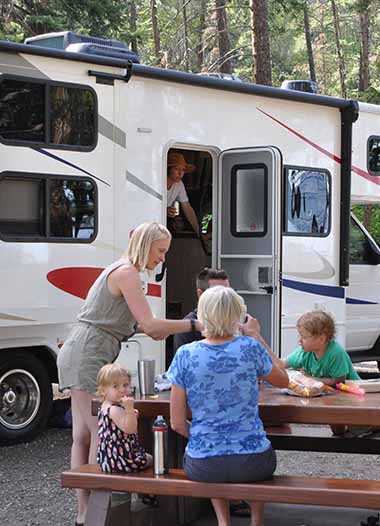
Time investment matters in meal cost calculations. Cooking requires grocery shopping time, meal preparation, and cleanup. Many travellers find the rhythm relaxing, morning coffee on your campsite picnic table, preparing lunch while parked at a scenic pullout, grilling dinner at your evening campground. Others prefer maximizing sightseeing time and are willing to pay for restaurant convenience.
When Does RV Travel Stop Being Cost-Effective?
RV travel may lose cost advantages in specific scenarios where rental duration, group size, destination choices, or travel pace create less favourable economics compared to traditional vacations. Understanding these patterns helps you choose the right approach for each trip.
Short trips of fewer than 5 days often struggle to justify RV costs. Rental companies typically charge higher daily rates for short bookings, and the fixed costs of rental don’t have sufficient time to spread across multiple nights of avoided hotel fees. A three-day weekend may not provide enough accommodation savings to offset rental and fuel expenses.
Solo travellers rarely find significant savings with RV rentals. One person pays the full RV rental cost while enjoying benefits typically reserved for groups. A solo traveller in a Deluxe Van Camper may spend similar amounts to staying in budget hotels.
Long-distance flights to starting points may erode potential RV savings. Flying from Toronto to Vancouver, renting an RV to explore BC, then flying home adds significant transportation costs. RV value typically works best when driving from your home region or flying to a nearby depot location to explore surrounding areas.
Urban-focused trips often favour hotels over RVs. Navigating cities in large motorhomes creates parking challenges. Urban campgrounds may cost nearly as much as budget hotels while providing less convenient locations. Exploring downtown Vancouver, Toronto, or Montreal often works better from centrally located hotels, using public transportation.
Winter travel in cold climates may reduce an RV's value due to higher heating costs. Generator fuel for continuous heating in freezing temperatures could add $40- $60 per day. Frozen water lines, uncomfortable temperatures, and limited winter campground access may make hotels more practical for travel from December through March in most Canadian regions.
Peak season in popular destinations may create less favourable RV economics. August in Banff or July on Vancouver Island finds campgrounds charging premium rates while requiring advance bookings. Popular campgrounds may cost $50-$70 nightly during peak season. Shoulder-season travel often offers better RV value.
Scenarios Where Hotels May Make More Financial Sense
Scenario | Considerations | Typical Pattern |
Trips under 5 days | High daily RV rates, limited time for savings accumulation | Hotels often more economical |
Solo travellers | Full RV costs without group cost-sharing benefits | Hotels typically comparable or less |
Urban exploration | Parking challenges, suburban campground locations | Hotels usually more convenient and competitive |
Winter travel (Dec-Feb) | Substantial heating costs, frozen system risks | Hotels generally more practical |
Peak season popular parks | Premium campground rates, advance booking required | Cost difference narrows significantly |
For detailed information about rental costs and available vehicle options, visit the CanaDream pricing FAQ page.
Frequently Asked Questions About RV Costs vs Hotels
Is RV travel actually cheaper for a family of four compared to hotels?
Yes, RV travel may be cheaper for families of four compared to hotels when you factor in accommodation and transportation together, though results vary by specific choices and rental rates. Hotel rooms plus a rental car might reach $3,300-$5,300 for two weeks before meals, while RV travel includes campsite fees ($560), fuel costs ($1,100+), and the RV rental rate. Potential food savings from cooking in the RV rather than dining out could provide additional value, though actual savings depend heavily on dining preferences and the restaurants chosen. Check current RV rental rates to accurately calculate total trip costs.
Do couples save money by renting an RV rather than booking hotels?
No, couples typically do not save significant money renting an RV compared to budget hotel options, with costs often similar or slightly higher for RV travel, depending on rental rates. However, when comparing against mid-range or boutique hotels, RV travel may become more cost-competitive. The decision often comes down to valuing privacy, flexibility, and outdoor experience beyond pure financial considerations, as many couples find these intangible benefits worth any modest cost difference. Review current rental rates to determine the best value for your specific situation.
Does cooking meals in the RV really save significant money?
Yes, cooking meals in the RV may save substantial money compared to restaurant dining, potentially reducing food costs by 40-60% over multi-week trips, though actual savings vary widely. Estimated grocery costs for families cooking most meals might be $700-$1,000 for two weeks, including some restaurant treats, compared to $3,000-$4,200 for all restaurant meals, though these figures depend heavily on food preferences, restaurant choices, and shopping habits. The meal savings potential remains consistent regardless of RV rental costs.
Does it always make more financial sense to choose hotels over RV rentals?
No, there are circumstances when hotels make more financial sense than RV rentals, such as for trips under five days, solo travellers, urban-focused vacations, and winter travel in cold climates. Short trips incur higher daily RV rental rates, leaving insufficient time to accumulate potential accommodation savings. Solo travellers pay full RV costs without group benefits. Urban exploration typically works better from centrally-located hotels. Winter heating costs may add substantially to daily expenses, making heated hotels more practical from December through March in most Canadian regions.
Cost comparisons provide valuable planning information, but they don't capture what makes RV travel special. Even when the numbers don't show dramatic savings, many Canadian families return to RV vacations year after year. Waking up to mountain views from your own bed, cooking breakfast while watching wildlife, changing plans without cancellation penalties, and creating campfire memories under star-filled skies, these experiences justify the investment regardless of whether you save a few hundred dollars compared to hotels.
RV travel isn't just about the destination or the budget; it's about the freedom, flexibility, and unforgettable moments that happen when your home travels with you across this beautiful country.