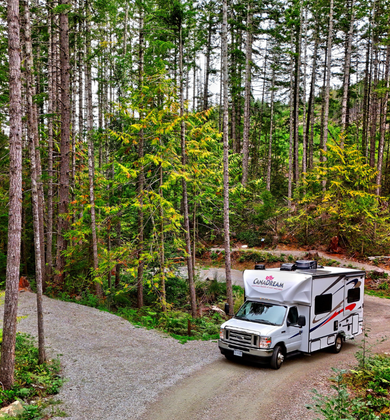
Follow the U.S. Men’s National Team in an RV. Find the best camping near the stage of the event as the football world celebrates together.

Following the U.S. Men’s National Team: RV Travel Guide for the International Soccer Tournament
May 20th 2026
| 5 Minutes Read
Following the U.S. Men’s National Team: RV Travel Guide for the International Soccer Tournament
Table of Contents
- USMNT Group Stage Schedule
- Choosing Your CanaDream Vehicle
- Route-Specific Recommendations
- The Pacific Coast Journey: Los Angeles to Seattle
- Highway 101: The Coastal Route
- Interstate 5: The Inland Route
- Which Route to Choose?
- Exploring Beyond Match Days
The United States Men’s National Team enters the 2026 International Football Tournament with home advantage, playing group stage matches on American soil before potentially advancing through knockout rounds. For Canadian RVers travelling with CanaDream vehicles, following the USMNT offers straightforward logistics, as all American matches occur at venues accessible by RV without border complications. This guide maps the team’s confirmed schedule and provides strategic planning for travellers wanting to experience American football passion across the continent.
USMNT Group Stage Schedule
The United States competes in Group D alongside Paraguay, Australia, and one European playoff qualifier (Kosovo, Romania, Slovakia, or Türkiye). The group stage determines whether the team advances to the knockout rounds, where the football world comes together to create increasingly intense competition.
Match 1: June 12, Los Angeles
USA vs Paraguay
Venue: SoFi Stadium, Inglewood, California
Kickoff: TBD
The tournament opens for the United States at SoFi Stadium, one of North America’s newest and most impressive venues. This 70,000-capacity stadium in greater Los Angeles provides a spectacular setting for the USMNT’s first match.
Los Angeles sits in Southern California’s sprawling metropolis, requiring careful campground selection. RV parks within 50 kilometres of Inglewood fill quickly during major events. Consider campgrounds in Orange County, the San Fernando Valley, or coastal areas, though expect 60 to 90-minute drives to the stadium on match day.
Match 2: June 19, Seattle
USA vs Australia
Venue: Lumen Field, Seattle, Washington
Kickoff: TBD
The second group match moves north to Seattle, a 1,800-kilometre drive from Los Angeles requiring two to three days of comfortable RV travel. Seattle’s compact downtown location and the surrounding Puget Sound region offer excellent RV camping. Campgrounds east of the city in the Cascade foothills or north toward the Canadian border provide scenic bases.
Match 3: June 25, Los Angeles
USA vs Kosovo/Romania/Slovakia/Türkiye (TBD)
Venue: SoFi Stadium, Inglewood, California
Kickoff: TBD
The group stage concludes back at SoFi Stadium, with the opponent determined by European playoff results. The return to Los Angeles means RVers following all three matches make a round trip: Los Angeles → Seattle → Los Angeles, totalling approximately 3,600 kilometres. This loop takes seven to ten days, allowing for match attendance, rest days, and exploring the Pacific coast.
Choosing Your CanaDream Vehicle
CanaDream offers multiple vehicle options suited to different group sizes and comfort preferences for your USMNT tour. Selecting the right vehicle impacts driving experience, fuel costs, and campground availability along the Pacific coast route.
Campervans
Deluxe Van Camper (DVC)
Sleeps two in a compact package, ideal for couples. The van’s smaller size navigates Big Sur’s tight curves and urban Los Angeles traffic with ease. Fuel economy surpasses larger motorhomes, reducing costs on the 3,600-kilometre loop. The trade-off comes in limited interior space and basic amenities.
Super Van Camper (SVC)
Accommodates two to three travellers with better amenities than the DVC while maintaining van-sized agility. This middle ground works well for the Los Angeles–Seattle circuit, offering comfortable sleeping, small kitchen facilities, and manageable driving on coastal highways.
Maxi Travel Camper (TCA)
The truck camper design sleeps two to three, providing home-like comfort in a format that handles Highway 101’s demanding sections confidently. Four-wheel drive capability allows exploring forest service roads and accessing remote campgrounds near Olympic National Park or Redwood country.
Motorhomes
Compact Motorhome (MHC)
Sleeps three to four in the smallest motorhome format. This size balances interior space with drivability, particularly important for Big Sur navigation. The compact footprint fits standard campground sites easily, increasing availability at popular coastal locations.
Midi Motorhome (MHB)
Accommodates four travellers with separate sleeping areas and full bathroom facilities. This mid-size option provides comfort for the 10 to 14-day tour without becoming unwieldy on winding coastal roads. Families with children find the layout practical for extended travel.
Large Motorhome (MHL)
Sleeps up to six with a generous living space, full kitchen, and bathroom. The increased size demands more cautious driving through Big Sur but rewards with home-like comfort at campgrounds. Groups sharing costs find this option economical per person.
Maxi Motorhome (MHA)
The largest standard motorhome sleeps six with maximum amenities. This size excels on Interstate 5’s straight highways but requires careful consideration for Highway 101’s coastal sections. Some Big Sur campgrounds restrict vehicle lengths, limiting overnight options along that route.
Maxi Plus Motorhome (MHX)
Premium features and spacious layout accommodate up to six travellers in luxury. Best suited for I-5 routing or travellers prioritizing comfort over accessing every coastal campground. The size demands thoughtful route planning but delivers exceptional living space.
Route-Specific Recommendations
For Highway 101 Coastal Route:
Choose campervans or Compact/Midi Motorhomes. These vehicles handle Big Sur’s narrow roads and tight curves confidently while fitting smaller coastal campground sites. The Super Van Camper or Compact Motorhome represent an optimal balance of comfort and maneuverability.
For Interstate 5 Inland Route:
Any CanaDream vehicle works well on I-5’s broad highways. Larger motorhomes like the Maxi Motorhome or Maxi Plus provide maximum comfort without driving challenges, ideal for groups wanting spacious living quarters.
For Combined Routes:
If taking Highway 101 one direction and I-5 the other, choose based on which route you’ll drive first or which presents greater concern. The Midi Motorhome offers the best compromise—manageable on coastal roads while providing substantial comfort.
The Pacific Coast Journey: Los Angeles to Seattle
The 1,800-kilometre drive between America’s USMNT venues showcases the Pacific coast’s extraordinary diversity. Two primary routes offer distinct experiences, each rewarding RV travellers with unforgettable landscapes.
Highway 101: The Coastal Route
Highway 101 hugs the Pacific shoreline through California and Oregon, adding distance but delivering spectacular ocean views, coastal towns, and dramatic cliffs. This route extends travel time by one to two days compared to I-5, but the scenery justifies the extra hours.
Malibu to Santa Barbara (150 km)
Departing Los Angeles, Highway 1 winds along Malibu’s beaches before joining 101 near Ventura. Santa Barbara’s Spanish colonial architecture and palm-lined waterfront create a Mediterranean atmosphere. Stop at the historic mission or simply walk Stearns Wharf extending into the Pacific.
San Luis Obispo to Big Sur (200 km)
San Luis Obispo sits halfway between Los Angeles and San Francisco, a natural overnight stop. North of here, Highway 1 enters Big Sur, arguably California’s most dramatic coastline. The road carves into cliffs hundreds of metres above crashing waves. McWay Falls drops directly onto a pristine beach. Bixby Creek Bridge arches 85 metres above a rocky canyon.
RV travel through Big Sur requires careful planning. The winding road challenges large motorhomes, with narrow lanes, tight curves, and steep grades. Some RV parks restrict vehicle lengths. Drive during daylight, allowing extra time for slow progress through this stunning but demanding section.
Monterey Peninsula (50 km)
Monterey Bay’s coastline features cypress-studded headlands, tide pools, and the famous 17-Mile Drive through Pebble Beach. Monterey’s Cannery Row blends tourism with genuine fishing harbour character. Carmel-by-the-Sea offers art galleries and upscale dining in a fairy-tale village setting.
San Francisco Bay Area (200 km)
Cross the Golden Gate Bridge into San Francisco, or bypass the city via Highway 101 through Marin County’s rolling hills. Point Reyes National Seashore extends west into the Pacific, offering hiking trails, lighthouse views, and elephant seal colonies.
Redwood Country (400 km)
North of San Francisco, 101 enters redwood territory. These ancient giants tower 100 metres tall, creating cathedral-like forests. Avenue of the Giants parallels 101 through Humboldt Redwoods State Park, a 50-kilometre scenic detour beneath towering trees. Pull into groves, walk among trunks wider than your RV, and experience the primeval atmosphere.
Small towns like Garberville, Fortuna, and Arcata provide services and RV camping. This region’s remote character means planning fuel stops and campground reservations ahead.
Oregon Coast (500 km)
Crossing into Oregon, 101 continues hugging the coastline. Massive rock formations rise from beaches near Brookings and Gold Beach. Oregon Dunes National Recreation Area protects 65 kilometres of coastal sand dunes, some reaching 150 metres high. Newport’s historic waterfront features working fishing docks and the Oregon Coast Aquarium.
Cannon Beach’s Haystack Rock dominates the shoreline, a 70-metre sea stack accessible during low tide. Nearby Ecola State Park offers clifftop views stretching to Tillamook Head. Late June brings mild weather ideal for beach walks and coastal exploration.
Washington Coast to Seattle (300 km)
Washington’s coast appears briefly before 101 turns inland toward Olympia. Olympic National Park’s rainforests, mountain peaks, and Pacific beaches create extraordinary diversity within one park. Hurricane Ridge offers alpine views without technical hiking.
From Olympia, I-5 runs 100 kilometres north to Seattle through Puget Sound’s urban corridor.
Interstate 5: The Inland Route
I-5 provides faster, easier driving through California’s Central Valley and Oregon’s Willamette Valley. This route sacrifices coastal drama for efficiency, cutting travel time by several hours and avoiding Big Sur’s challenging curves.
Sacramento Valley (600 km)
North of Los Angeles, I-5 crosses the Tehachapi Mountains into California’s Central Valley. This agricultural heartland stretches 700 kilometres, producing much of America’s fruits, vegetables, and nuts. The landscape’s flat monotony means covering distance quickly, though summer heat often exceeds 40°C.
Sacramento, California’s capital, offers museums, riverfront parks, and urban amenities. The city serves as a logical overnight stop midway between Los Angeles and Oregon.
Shasta Cascade (300 km)
North of Sacramento, I-5 climbs into mountainous terrain. Mount Shasta dominates the skyline, a 4,300-metre volcanic peak visible for hundreds of kilometres. Shasta Lake, California’s largest reservoir, sprawls across drowned valleys with countless coves and inlets.
Redding provides camping and services at the region’s centre. Lassen Volcanic National Park sits 80 kilometres east, featuring boiling mud pots, steaming fumaroles, and recent volcanic activity.
Southern Oregon (400 km)
Crossing into Oregon, I-5 follows the Siskiyou Mountains through forests recovering from past logging. Ashland hosts the renowned Oregon Shakespeare Festival, a surprising cultural oasis in this rural region. Crater Lake National Park, 100 kilometres east of I-5, protects America’s deepest lake, filling an ancient volcano’s caldera.
Grants Pass and Roseburg serve as service towns along this stretch, both offering RV camping near the interstate.
Willamette Valley (300 km)
Oregon’s Willamette Valley parallels I-5 from Eugene to Portland, a fertile agricultural region famous for wine production. Eugene offers university town character and outdoor recreation access. Portland’s urban culture, food scene, and nearby Columbia River Gorge attract extended stops.
North of Portland, I-5 crosses the Columbia River into Washington, then covers 250 kilometres to Seattle through increasingly urban landscapes.
Which Route to Choose?
Take Highway 101 if:
- You prioritize scenery over efficiency.
- You have extra days in your schedule.
- You’re comfortable driving challenging roads.
- Coastal landscapes and ocean views appeal strongly.
- Your RV suits narrow, winding highways.
Take Interstate 5 if:
- You need the fastest route between matches.
- Your schedule is tight.
- You prefer easier driving conditions.
- You want to avoid Big Sur’s demanding roads.
- You’re driving a large motorhome.
Many travellers combine routes, taking one direction southbound and the other northbound. This maximizes variety while experiencing both the coast and interior.
Exploring Beyond Match Days
Southern California Diversions
Joshua Tree National Park (200 km east of Los Angeles)
Two desert ecosystems meet in this otherworldly landscape. Twisted Joshua trees dot boulder-strewn valleys beneath crystalline skies. Rock formations attract climbers from around the world, while hiking trails explore hidden oases and ancient petroglyphs. Late June brings extreme heat, so visit early morning or evening.
Channel Islands National Park (offshore from Ventura)
Five islands preserve pristine coastal ecosystems accessible only by boat or plane. Day trips explore sea caves, spot seals and sea lions, and experience California’s coast as it existed before development. Island Packers operates a ferry service from Ventura Harbour.
Central Coast Attractions
Pinnacles National Park (150 km south of San Jose)
Volcanic rock formations create spires, caves, and talus passages. Spring wildflowers carpet hillsides, though June visitors find golden grasses and azure skies. California condors soar above cliffs, part of recovery efforts bringing these massive birds back from near extinction.
Santa Cruz and Monterey Peninsula (200 km south of San Francisco)
The Santa Cruz Beach Boardwalk preserves classic seaside amusement park character. Monterey’s Cannery Row, 17-Mile Drive, and Carmel-by-the-Sea combine ocean scenery with cultural attractions. The Monterey Bay Aquarium ranks among America’s finest, showcasing regional marine life in innovative exhibits.
Northern California Wilderness
Lassen Volcanic National Park (80 km east of Redding)
Active geothermal features bubble and steam throughout this volcanic landscape. Bumpass Hell’s boardwalk trail crosses boiling springs and fumaroles. Lake Helen reflects Lassen Peak, the park’s dominant summit. The park sees far fewer visitors than Yosemite, offering solitude in remarkable terrain.
Oregon Highlights
Crater Lake National Park (100 km east of I-5)
America’s deepest lake fills an ancient volcano’s collapsed summit, creating impossibly blue water surrounded by caldera cliffs. The Rim Drive circles the lake, with viewpoints every few kilometres. Late June often brings lingering snow at 2,100-metre elevation, though the road typically opens by mid-month.
Columbia River Gorge (east of Portland)
The Columbia River carves through the Cascade Range, creating a dramatic gorge with waterfalls cascading from cliffs. Multnomah Falls drops 189 metres in two tiers, Oregon’s most visited natural attraction. The Historic Columbia River Highway winds through forests with continuous viewpoints.
Washington Adventures
Olympic National Park (west of Seattle)
Three distinct ecosystems occupy one park. Temperate rainforests receive over 3,500 millimetres of annual rainfall, creating moss-draped forests of enormous trees. Alpine meadows surround glaciated peaks in the park’s interior. Pacific beaches feature sea stacks, tide pools, and driftwood-strewn sands.
Hurricane Ridge Road climbs to alpine heights with views across the Olympic Mountains. Late June brings wildflower blooms in high-elevation meadows. The Hoh Rainforest’s Hall of Mosses trail showcases emerald-green old-growth forest.
San Juan Islands (ferry from Anacortes)
This archipelago in northern Puget Sound offers island-hopping adventures. Orcas Island provides mountain hiking and artisan communities. San Juan Island features historic sites and whale-watching opportunities. Lopez Island maintains a rural agricultural character. Washington State Ferries connect the islands, accommodating RVs on larger vessels.
Mount Rainier National Park (150 km southeast of Seattle)
Washington’s iconic volcano dominates the state’s skyline. Paradise, the park’s main visitor area, offers wildflower meadows below the mountain’s glaciated summit. Late June brings peak bloom in subalpine zones. The park’s proximity to Seattle makes it an easy detour before or after the USMNT match.
Not affiliated with or endorsed by FIFA or the FIFA World Cup 2026.
Tailgating rules, parking regulations, and match times vary significantly by stadium and action hub. Tournament regulations for the 2026 international soccer tournament may differ from standard stadium policies. Please check the official rules and times for your specific venue before you head out.
Frequently Asked Questions
Check out these FAQs for answers to any 2026 Soccer Game related questions.
Don't see what you're looking for?
Yes, you can travel Cross-Border to watch USA matches. Guests must pay the US driving fee before entering the USA and ensure they have informed our reservation team prior to pick up.
No, Mexico is a prohibited area wile travelling with CanaDream. Please see our Prohibited Area Map for further details.
If you have planned on watching any matches in Mexico, El Monte RV permits cross-border travel to Mexico for Guests who secure approval in advance.
If you have planned on watching any matches in Mexico, El Monte RV permits cross-border travel to Mexico for Guests who secure approval in advance.
All of our vehicles will be avilable for you to rent during the 2026 Soccer Games. See all vehicles here.
Consider adding Flexible Change Cover at booking. It’s designed to give Guests more freedom to amend travel plans around major events.
Click here to view the full Cancellation Policy.
Click here to view the full Cancellation Policy.
Start by identifying which matches you want to attend, then build your RV route connecting those event locations with travel days between matches. The tournament's group stage runs June 11-27, with knockout rounds from June 30 through the July 19 final. Build flexibility into your schedule as knockout round locations depend on group stage results and won't be confirmed until teams advance.
Every rental includes a full kitchen, bathroom, sleeping areas, heating and air conditioning, and 24/7 emergency roadside assistance. Base mileage allowances vary by rental duration, with additional miles available for purchase. Essential add-ons like kitchen kits, linens, outdoor furniture, and liability reduction can be selected through Travel Extras.
Tailgating traditions and regulations vary by stadium, with some venues offering robust tailgating areas while others have restrictions. US stadiums generally embrace tailgating culture, with designated zones for grills, games, and pre-match celebrations. Canadian venues may have more limited tailgating options, while Mexican stadiums vary by location. Check specific venue policies when planning your trip, and bring portable grills, folding tables, and team decorations to create your mobile fan zone.
Prioritize campgrounds offering full hookups (water, electric, sewer), clean restroom facilities, and either proximity to stadiums or public transportation connections. Additional valuable amenities include Wi-Fi for checking match updates, laundry facilities for extended trips, and dump stations for waste management.
Yes, as per our Pet Policy, Guests can bring up to 2 animals. See Pricing Page for pricing details.
Please check with U.S. Customs and Border Protections to ensure requirements are met if you wish to bring your animals into the USA.
Please check with U.S. Customs and Border Protections to ensure requirements are met if you wish to bring your animals into the USA.
Find tickets here.
Absolutely, and RV travel is ideal for multi-city soccer game experiences. Check out our recommended itineraries to connect event locations over multiple days, allowing you to experience diverse match atmospheres while exploring regional attractions between games.
Book early to secure the best RV rental rates, cook meals in your RV rather than dining out for every meal, and travel during shoulder days between matches when campground rates may be lower. Check Rental Deals for seasonal promotions and long-term rental discounts.
Pack layers for varying climates, comfortable walking shoes, team jerseys and colors, sunscreen, tailgating supplies (portable grill, folding chairs, cooler), and camera equipment for capturing memories. Don't forget essential documents (passports, rental agreement, insurance), prescription medications, and chargers for electronics. Our comprehensive packing guides provide detailed lists organized by category and trip duration.
RV travel is very safe when following standard precautions: lock doors when away, park in well-lit campgrounds, don't leave valuables visible, and stay aware of your surroundings. All CanaDream RV rentals include 24/7 emergency roadside assistance.